Diego Batres, Isabel Seong, Pedro Aycinena, Tae Yeon Lim
http://edition.cnn.com/2010/WORLD/asiapcf/04/22/borneo.wwf.species/index.html
Our sixteenth news article is named "Nature's 'treasure' unearthed in Borneo". It is about some new and unusual species that have been discovered in Borneo. The author is Hilary Whiteman, and there is no bias.
_______________________________________________
Scientists found 123 new species in Borneo. These include love slugs, color-changing frogs, and huge stick insects. Studies show that the number of new species discovered has increased since 2007. This exotic area is now protected. Here are some of the animals:
-A flying frog which is brown during the day and green during the night.
-A stick insect 56.7 centimeters long
-A multicolored snake with a green and orange head that fades into blue and then brown as it goes into the body
-A flat-headed frog with no lungs that breathes through its skin
-A slug with an extending tail 3 times longer than its body that shoots "love darts"
-A freshwater prawn
-A reddish-brown hairy ant
-Many fish
-37 new orchids
__________________________________________
Diego Batres: I think this is very interesting. Love slugs? Flying, color-changing frogs? The diversity of species is infinite!
Tae-yeon Lim: I think this is something interesting but also fun! Knowing new info...
Pedro Aycinena: This is very cool because imagine that they discovered new dogs, lions, etc.
Iasbel Seong: I think that if diversity didn't exist, the world would have been extremely boring.
Monday, April 26, 2010

Monday, April 12, 2010
The world's megacities
Isabel Seong, Diego Batres, Pedro Aycinena, Tae Yeon Lim
http://edition.cnn.com/2010/TECH/04/08/urban.planet.megacities/index.html
Our fourteenth news is called "The world's megacities". There is no author's name. We found it on April 12th. It has a bias: Demographia.
---------------------------------------------------------------------------------
Megacities are metropolitan areas with a total population in excess of 10 million people. Some examples of megacities, those that are most populous: Tokyo in Japan, which has a larger population than Algeria, Canada or Uganda; and Shanghai, a rapidly expanding city. Shanghai is known to be China's economic powerhouse, and it is also the world's biggest metropolitan area, covering 2,914 square kilometers.
In spite of whatever we think of them, megacities aren't staying; they are growing. An example of growing megacity is New Delhi, which will have 29.49 million inhabitants by 2025. It's current population is 20.99 million.
By 2025, the number of megacities will grow from 21 to 29 and account for 10.3 percent of the world's urban population. Currently, just over 9 percent of the world's urban population lives in a megacity.
Megacities bring a lot of things with them. They don't just bring wealth and employment, but also cultural benefits. In addition, some megacities are more efficient than their less populous counterparts.
However, the high density of people also brings problems, like health issues. For example, the flu viruses and psychological problems caused by poverty and stress can transmit much more rapidly.
---------------------------------------------------------------------------------
Isabel Seong: I found this article interesting because I lived in a megacity until I was 8 year old. I like Seoul very much, and I think that it is much more efficient when people live close together. The reason for that is because they can find their need rapidly.
Tae-Yeon Lim: I think these is good because, the people that do not have job can have opportunity to have a job
Diego Batres: I think that these megacities are good and bad at once, they have advanced technology and lots of job opportunities, but they emit lots of pollution and are very crowded.
Pedro Aycinena: This something the earth must start to notice, people are growing and we are going to have to compete for everything. Like food, water, schools, college, etc.
http://edition.cnn.com/2010/TECH/04/08/urban.planet.megacities/index.html
Our fourteenth news is called "The world's megacities". There is no author's name. We found it on April 12th. It has a bias: Demographia.
---------------------------------------------------------------------------------
Megacities are metropolitan areas with a total population in excess of 10 million people. Some examples of megacities, those that are most populous: Tokyo in Japan, which has a larger population than Algeria, Canada or Uganda; and Shanghai, a rapidly expanding city. Shanghai is known to be China's economic powerhouse, and it is also the world's biggest metropolitan area, covering 2,914 square kilometers.
In spite of whatever we think of them, megacities aren't staying; they are growing. An example of growing megacity is New Delhi, which will have 29.49 million inhabitants by 2025. It's current population is 20.99 million.
By 2025, the number of megacities will grow from 21 to 29 and account for 10.3 percent of the world's urban population. Currently, just over 9 percent of the world's urban population lives in a megacity.
Megacities bring a lot of things with them. They don't just bring wealth and employment, but also cultural benefits. In addition, some megacities are more efficient than their less populous counterparts.
However, the high density of people also brings problems, like health issues. For example, the flu viruses and psychological problems caused by poverty and stress can transmit much more rapidly.
---------------------------------------------------------------------------------
Isabel Seong: I found this article interesting because I lived in a megacity until I was 8 year old. I like Seoul very much, and I think that it is much more efficient when people live close together. The reason for that is because they can find their need rapidly.
Tae-Yeon Lim: I think these is good because, the people that do not have job can have opportunity to have a job
Diego Batres: I think that these megacities are good and bad at once, they have advanced technology and lots of job opportunities, but they emit lots of pollution and are very crowded.
Pedro Aycinena: This something the earth must start to notice, people are growing and we are going to have to compete for everything. Like food, water, schools, college, etc.
Tuesday, April 6, 2010
South Korea stops search for missing sailors
Isabel Seong, Diego Batres, Tae Yeon Lim, Pedro Aycinena
http://www.cnn.com/2010/WORLD/asiapcf/04/04/south.korea.sunken.ship/index.html?iref=allsearch
Our thirteenth news is titled "South Korea stops search for missing sailors". It is written by Andrew Salmon. It came out at April 4th. It's theme is World, and it has no bias.
-----------------------------------------------------------
-----------------------------------------------------------
Isabel Seong- I feel sorry for the ones that died in the cold ocean, and more for the families of the lost ones. They have lost their husbands and fathers. I think that I won't be able to be same if my father died.
Pedro Aycinena- This is something very awful to read. But I have this feeling that the North Koreans did this. Just think about it, a ship breaks in half near North Korea and South and North Korea have been in war. And they also disagree in a lot of things.
Tae-yeon Lim: I feel sorry for the families that had lost their fathers and husbands. If that had happen to me I feel really bad. And I want no more war in North and South Korea.
Diego Batres: I feel very sorry for those who lost relatives in that accident, and even sorrier since their bodies could not be found and buried. If even their dead bodies were found, the family could have a funeral for him and bury him in a cemetery.
http://www.cnn.com/2010/WORLD/asiapcf/04/04/south.korea.sunken.ship/index.html?iref=allsearch
Our thirteenth news is titled "South Korea stops search for missing sailors". It is written by Andrew Salmon. It came out at April 4th. It's theme is World, and it has no bias.
-----------------------------------------------------------
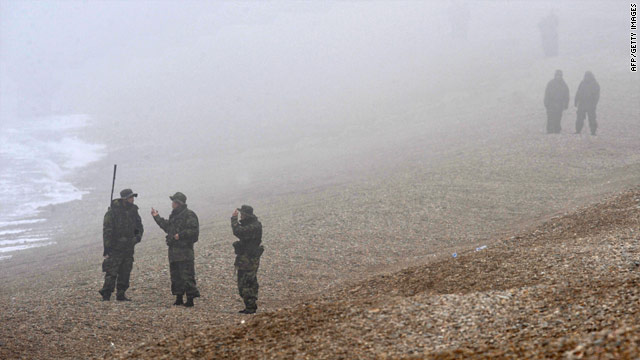
A South Korean warship has sunk in waters close to North Korea a week ago. Search for dozens of sailors lost there stopped late Saturday after a request from the families of the missing men.
Although naval experts have said that men trapped underwater could only remain alive for 60 to 70 hours, many hoped that some sailors might somehow still be alive.
That possibility dissapeared after the recovery of Chief Petty Officer Nam Ki-hoon's body.
The Cheonan sank in mysterious conditions -- breaking in half on March 26.
Fifth-eight men were rescued at the scene. The 45 missing sailors are believed to have been trapped in the ship's stern, where the crew's quarters and galley were located.
Their families had been vocal in demanding the navy expedite its efforts to rescue their loved ones.
Although naval experts have said that men trapped underwater could only remain alive for 60 to 70 hours, many hoped that some sailors might somehow still be alive.
That possibility dissapeared after the recovery of Chief Petty Officer Nam Ki-hoon's body.
The Cheonan sank in mysterious conditions -- breaking in half on March 26.
Fifth-eight men were rescued at the scene. The 45 missing sailors are believed to have been trapped in the ship's stern, where the crew's quarters and galley were located.
Their families had been vocal in demanding the navy expedite its efforts to rescue their loved ones.
-----------------------------------------------------------
Isabel Seong- I feel sorry for the ones that died in the cold ocean, and more for the families of the lost ones. They have lost their husbands and fathers. I think that I won't be able to be same if my father died.
Pedro Aycinena- This is something very awful to read. But I have this feeling that the North Koreans did this. Just think about it, a ship breaks in half near North Korea and South and North Korea have been in war. And they also disagree in a lot of things.
Tae-yeon Lim: I feel sorry for the families that had lost their fathers and husbands. If that had happen to me I feel really bad. And I want no more war in North and South Korea.
Diego Batres: I feel very sorry for those who lost relatives in that accident, and even sorrier since their bodies could not be found and buried. If even their dead bodies were found, the family could have a funeral for him and bury him in a cemetery.
Subscribe to:
Posts (Atom)